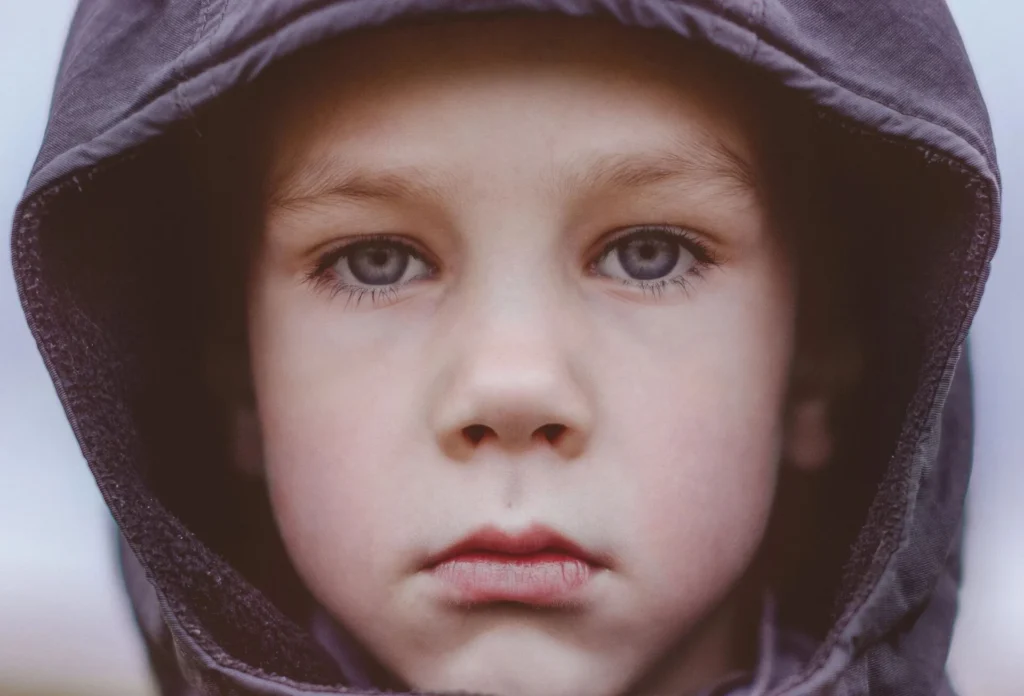
Anna 9, and her brother Keith 11 are two middle schoolers from a middle-class suburban family.
Things haven’t been rosy at home lately; mom and dad have been fighting a lot.
Finally, one weekend, after dinner, parents announce, “mom and dad are getting a divorce” and that “Dad is going to be leaving separately in a week.”
This is a grown-up thing; the kids don’t quite understand.
Back in school the next Monday, you could tell something was off.
Anna is by herself a lot, doesn’t try to play with the other girls, she avoids eye contact, sadness envelops her every interaction.
She is usually a good sport. But today one of the girls makes a joke about her and she starts crying…
One the other side of the school is Keith’s class.
Keith is not ‘sad’, he is not moody, he is sitting at the back of the class having chatting with one of his peers while a class is ongoing.
They are talking about the new Marvel superhero movies he saw during the weekend. Teacher can hear him, but he could care less.
The teacher tries again and again to get him to pay attention to the lesson. He finally stopped talking, but he struggles to sit still.
Next, he crumpled up a piece of paper and flings it at some kid upfront while immediately looking away.
It did not end there. At lunch, some kid made a joke Keith didn’t like, he clatters the poor boy’s plate of meatball pasta onto the floor.
This goes on all week. Both kids, one sad and moody, the other irritable and agitated.
Eventually they get sent to the school counselor.
Anna is diagnosed with depression. Keith gets defiant oppositional disorder, or impulse control disorder, or if he is lucky, ADHD. His depression is invisible.
Keith grows up confused and angry. with a label.
Angry at himself, angry at his parent, angry at the world.
This is the story of many young boys.
Without a serious intervention, the path is typically the same.
Keith will start associating with other angry boys, Then Truancy. Then starts experimenting with drugs at 12, or 13. Drops out of school in the 9th or 10th grade. Juvenile detention. High chances of ending up a Convict between ages 19–21.
Universally, depression is the most debated and contrived Mental health diagnosis. Everybody recognizes the signs
The Sadness that won’t budge. The Crying and loss of motivation, loss of appetite, Low mood. Withdrawal from people. The air of darkness that follows you everywhere.
The part that surprises most people is that depression is typically expressed very differently between men and women.
For women, depression is easily recognizable, whereas for many young boys; it often takes a different form, aggression, anger, irritability, acting out, drinking, drug abuse. Risky behavior or using humor to hide the darkness underneath (think of the number of comedians we have lost to drug abuse and suicide; Rest in Peace Robin Williams).
Some Scholars say it’s biology, they point to testosterone, that aggressive hormone. Others blame it on the society; the programming that continually tell our men to “not cry like a girl”, or to ‘man up.’ When things get tough.
The truth lies somewhere in between.
In 2024, over 40,000 people killed themselves in the United State. Of those, about 38,200 were men. (Center of Disease Control and Prevention)
At some point, we have to question the socialization that permits boys to be angry but not sad
A society that tolerates aggressive boys, while labelling vulnerable ones as weak
When do we stop asking, “why is he so angry? “And rather ask What pain doesn’t he have words for?